How much a golf cart costs: new versus used at a glance
Golf cart prices by brand overlap more than most shoppers expect. A new cart from any of the five major names is a purchase in the same general category as a good used car’s down payment. A used cart from the same brand can cost a fraction of that. The brand sets the starting point, but the power type, battery, seating and age usually move the final number further than the badge does.
This guide gives no fixed dollar figures, because dealer pricing changes with model year, region, freight, supply and promotions, and a number printed here would be out of date quickly. What it gives is the relative position of each brand, the reasons behind it, and a method for comparing quotes so you can see the real total before you commit. Get written quotes from at least two dealers for any cart you are seriously considering, and use them in place of any range you read online, including this one.
A few general patterns hold across brands:
- New carts cost the most, but they carry a warranty, current battery technology and no hidden wear.
- Used carts cost less, but the battery pack is the biggest variable. A cart with tired batteries may need a replacement soon after you buy it.
- Gas and electric versions of the same model are usually priced differently, and the gap depends on the battery type.
- Factory-lifted, four-seat and street-legal configurations cost more than a basic two-seat cart.
Club Car: where its pricing sits and what you pay for
Club Car is one of the two largest names in the market, and its new carts generally price in the middle to upper part of the range. Much of what you pay for is the build. Club Car frames are aluminum, which resists rust, and that matters most to buyers in humid, coastal or wet climates where a steel frame can corrode over the years.
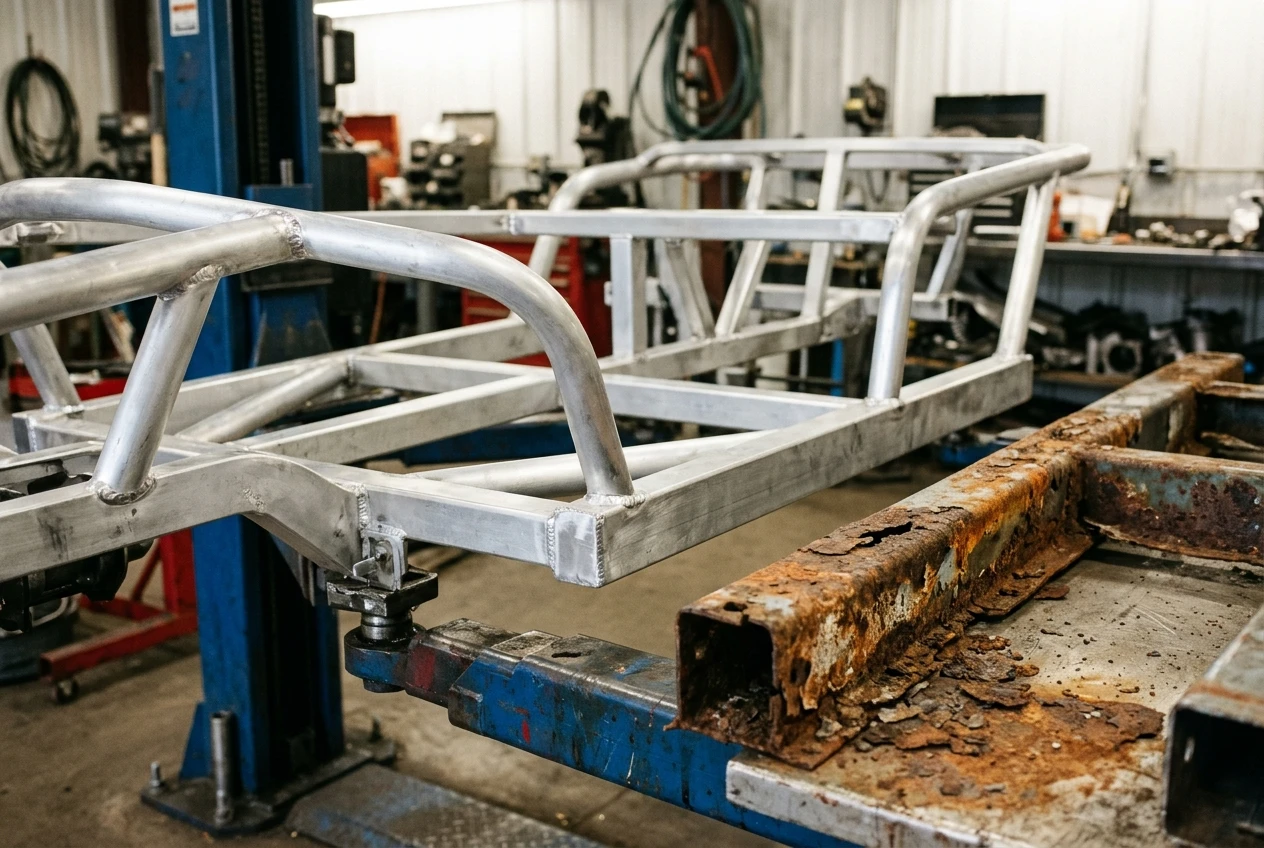
Club Car also sells a wide spread of models, from basic fleet-style carts to personal-use carts with more comfortable seats, nicer trim and more powerful drivetrains. That spread is why “Club Car price” is not one number. A base model and a fully equipped personal cart from the same brand can sit far apart, so compare quotes model by model and trim by trim.
Used Club Car carts are common because so many were sold to golf courses. Ex-fleet carts are often the cheapest way into the brand, though they have usually seen heavy daily use. A privately owned cart with fewer hours often costs more but tends to be in better shape. Ask which kind you are looking at.
When you request a quote, ask for these items in writing:
- The model name and model year
- Gas or electric, and for electric, the battery type and voltage
- Seating capacity
- Delivery, setup and dealer prep charges
- Taxes and any registration or title fees
E-Z-GO: pricing across gas, electric and lifted models
E-Z-GO is the other giant of the category, made by Textron, and it is sold in about as many configurations as Club Car. Its pricing tends to land in the same neighborhood as Club Car’s for comparable models, so shoppers often cross-shop the two directly. The better comparison is between two specific carts with matching features, not between the brands in general.
E-Z-GO is where the gas, electric and lifted question comes up most often, because the brand has a large catalog and a large aftermarket. Gas models cost differently than electric ones, and the difference depends on the battery in the electric version. Lifted models, whether lifted at the factory or by a dealer, add cost for the lift kit, the larger tires and the labor to install them.
There are two other reasons E-Z-GO pricing varies so much. First, the used market is deep, so you will find a wide spread of ages and conditions, and prices move with that spread. Second, many E-Z-GO carts are already modified when they reach the used market. A used cart advertised at a low price may already have a lift and custom wheels, which can be a bargain if you wanted them, since the previous owner paid for the parts. If you did not want them, a plain model may serve you better.
Yamaha: why its carts hold value on the used market
Yamaha is known for carts that keep their price on the used market. Dealers and owners commonly describe Yamaha as a brand with a reputation for durability and quiet, smooth operation, and that reputation supports resale values. A used Yamaha often costs more than a used cart of the same age from another brand, because sellers know buyers will pay for the name.
This works in two directions. If you buy new, a Yamaha may lose less of its value over the years you own it, so the real cost of ownership can be lower than the sticker price suggests. If you buy used, you may pay a premium compared with similar carts from other brands, and the bargain is harder to find.
Yamaha has sold both gas and electric carts, and the older gas models in particular have a following. When you compare a used Yamaha with a used Club Car or E-Z-GO, look at the condition and the battery or engine health first, then at the price difference. A well-kept older Yamaha can be a better purchase than a newer cart from a cheaper brand that has been neglected.
Icon and Evolution: the newer brands and what the lower price buys
Icon and Evolution are newer entrants, and they have built their appeal on offering more features for less money. Their carts often come with items that are paid upgrades on the established brands, such as modern styling, LED lighting, upgraded seating, larger wheels, and in many models lithium batteries. Check the spec sheet on the exact model you are considering, because standard equipment differs from model to model.
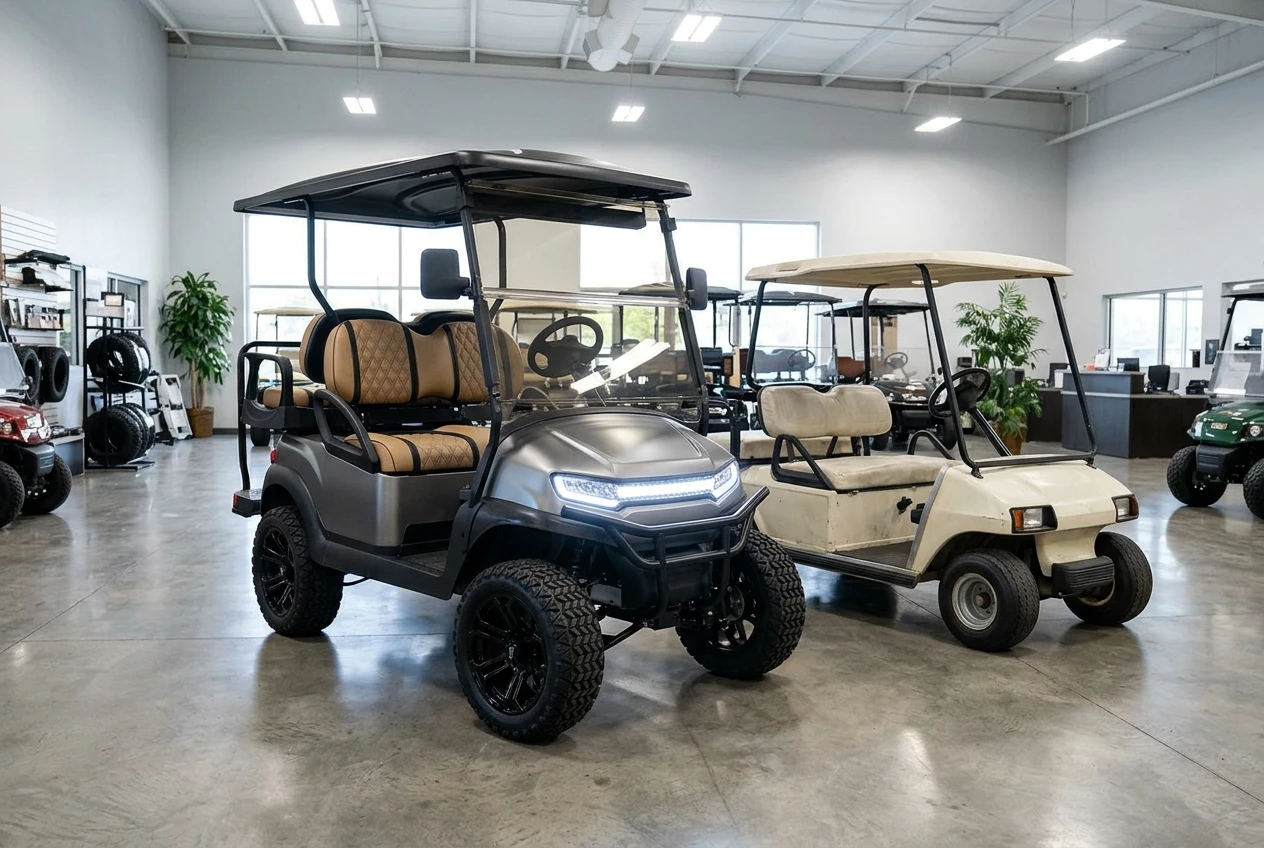
The lower price buys real features, but there are trade-offs to weigh before you commit:
- Resale value. Newer brands have a shorter track record on the used market, so it is harder to predict what a cart will fetch when you sell it.
- Dealer network. Parts and service depend on having a dealer nearby who supports the brand. Ask who will handle repairs and warranty work.
- Warranty terms. Read what is covered, for how long, and whether the battery has its own separate warranty.
- Parts availability. The big brands have decades of aftermarket parts. Confirm that the accessories you want will fit an Icon or Evolution.
If the features you want are standard on one of these carts, the comparison may favor it. Price an established-brand cart with the same lift, lights, seats and lithium battery added, and compare the totals. Sometimes the gap closes and sometimes it does not, and you only find out by pricing both fully equipped.
What drives the price: battery type, gas or electric, seats, lift, and age
Five factors do most of the work in setting a golf cart’s price, and they apply to every brand.
Battery type
Electric carts use either lead-acid or lithium batteries. Lead-acid packs cost less up front, but they need regular watering and eventually have to be replaced. Lithium packs cost more up front, are lighter, need no watering, and generally last longer. Lithium also tends to hold steadier power as the charge drops. Over a long period of ownership, lithium can work out cheaper, but the higher purchase price means you pay more at the start. When you compare quotes, confirm the battery type and voltage so you are comparing equal carts.
Gas or electric
Gas carts have an engine, a fuel tank, and the maintenance that goes with them: oil, filters, spark plugs and belts. Electric carts have fewer moving parts and need a place to plug in. Gas carts can go farther on a fill-up and are easier to refuel in the middle of a long day, while electric carts are quieter and cleaner. Price differences between the two vary by brand and model, so quote both if you have not settled on one.
Seats
A two-seat cart is the baseline. A four-seat model with a rear flip seat costs more, and a longer six-seat cart costs more still. The rear seat can fold flat into a cargo bed on many models, which gives you flexibility. Choose the seating you will use most days, because adding seats later is possible but costs more than buying the right cart first.
Lift
A lift raises the cart and allows larger tires. It changes the look and the ground clearance. Factory-lifted carts cost more than standard ones, and a lift kit added later costs money for the parts and for installation.
Age
Age has the clearest effect on used carts. A cart’s model year affects its price, its available parts and how much life its battery has left. Find the year on the serial number, which is usually on a sticker or plate on the frame, and check it against the seller’s claim.
Buying used: what to inspect and where the bargains hide
Used carts offer the best chance to spend less, and also the best chance to buy someone else’s problems. A methodical inspection covers most of the risk.
Check the batteries first. On an electric cart, the batteries are the most expensive part to replace. Ask how old they are, look for date codes on the batteries, and check the water level in lead-acid packs. Watch for corrosion on the terminals. Drive the cart and see whether it loses power on a hill or after a short distance. If the seller will let you, charge it and test again.
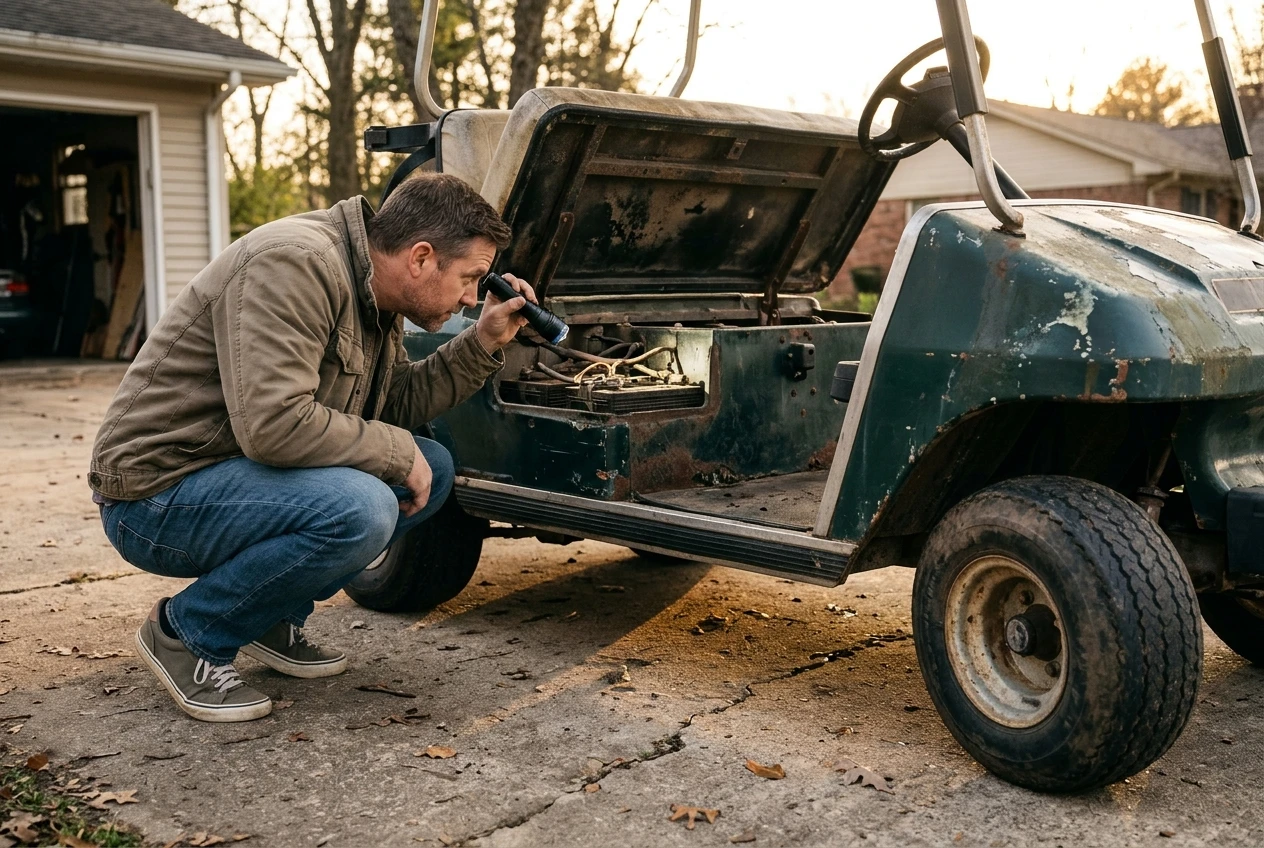
Check the frame and body. Look for rust on steel frames, cracks in the body panels and signs of past damage. Aluminum frames resist rust, but look for bends or weld repairs.
Check the drivetrain. On a gas cart, listen for knocking, look for smoke and check under the cart for oil leaks. On an electric cart, listen for grinding from the motor and test acceleration, forward and reverse.
Check steering, brakes and tires. Play in the steering wheel, a soft brake pedal or uneven tire wear point to maintenance that has been put off.
Check the charger. A missing or failing charger is an extra cost. Make sure the one included matches the cart’s battery type.
Bargains tend to hide in a few places:
- Carts being sold because the owner is upgrading, who may price to sell quickly
- Ex-fleet carts, which cost less but need a careful look at battery and body condition
- Carts that look dated but run well, since buyers pay for appearance and you can update it later
- Carts that already have accessories installed, where you get the parts at used prices
If you are not confident about inspecting a cart yourself, ask a dealer or a mechanic to look at it before you pay. A short inspection costs little compared with replacing a battery pack.
Budget for the extras: accessories and customization that add to the total
The price of the cart is rarely the final price. Most owners add something, and the additions can add a meaningful share to the total. Decide on the extras before you buy, so you can set a realistic budget and choose a cart that suits them.
Common additions include:
- Lift kits and larger tires. Raise the cart for ground clearance and a different look. Check that the kit is made for your brand and model, and ask whether installation is included.
- Wheels and tires. Custom wheels and all-terrain tires change appearance and handling. Wheel size affects speed readings and ride, so confirm compatibility with your lift.
- Seats. Upgraded seat cushions, a rear flip seat kit or a custom seat set change comfort and capacity.
- Lighting. LED headlights, tail lights, light bars and underglow improve visibility and style. If you want to drive on public roads, you may need a full street-legal package with turn signals, brake lights and mirrors.
- Weather protection. Windshields and enclosures extend the months you can use the cart comfortably.
- Storage and utility. Cargo boxes, rear baskets and roof racks suit carts used for work or hunting.
- Audio. Sound systems range from a single speaker to a full setup.
Street-legal rules differ by state and often by town, so check local requirements for registration, insurance and equipment before you assume your cart can use public roads.
Beyond accessories, plan for costs that come with ownership. Insurance, storage, battery maintenance or replacement, tires, and routine service all add up over the years. A simple way to see the whole picture is to write down five numbers for each cart you consider:
- The quoted price of the cart
- Delivery, setup, taxes and fees
- The cost of any battery replacement you expect soon
- The accessories you plan to add, with installation
- A yearly estimate for maintenance, insurance and storage
Add them up for each cart. A cheaper cart that needs new batteries and a lift kit can cost more than a pricier one that already has what you want. Seeing that total before you buy is the point of the exercise.
Browse golf cart accessories and customization options at bissellsgolfcarts.com to see what you can add to the cart you choose.