A golf cart that won’t start usually has a cheap cause, and the cheapest causes are the quickest to check. The order below runs from checks that take two minutes and no tools to checks that need a multimeter, and finally to the parts that are worth handing to a technician. Work down the list and stop as soon as the cart runs.
This guide is written for owners who add accessories such as lights, speakers and lift kits, because those add-ons are a real and often overlooked cause of a cart that won’t start. Where electric and gas carts differ, each gets its own section.
Start with the two-minute checks that fix more dead carts than you’d expect
Most of these are switches that got bumped, washed, or left in the wrong position. Check them before anything else.
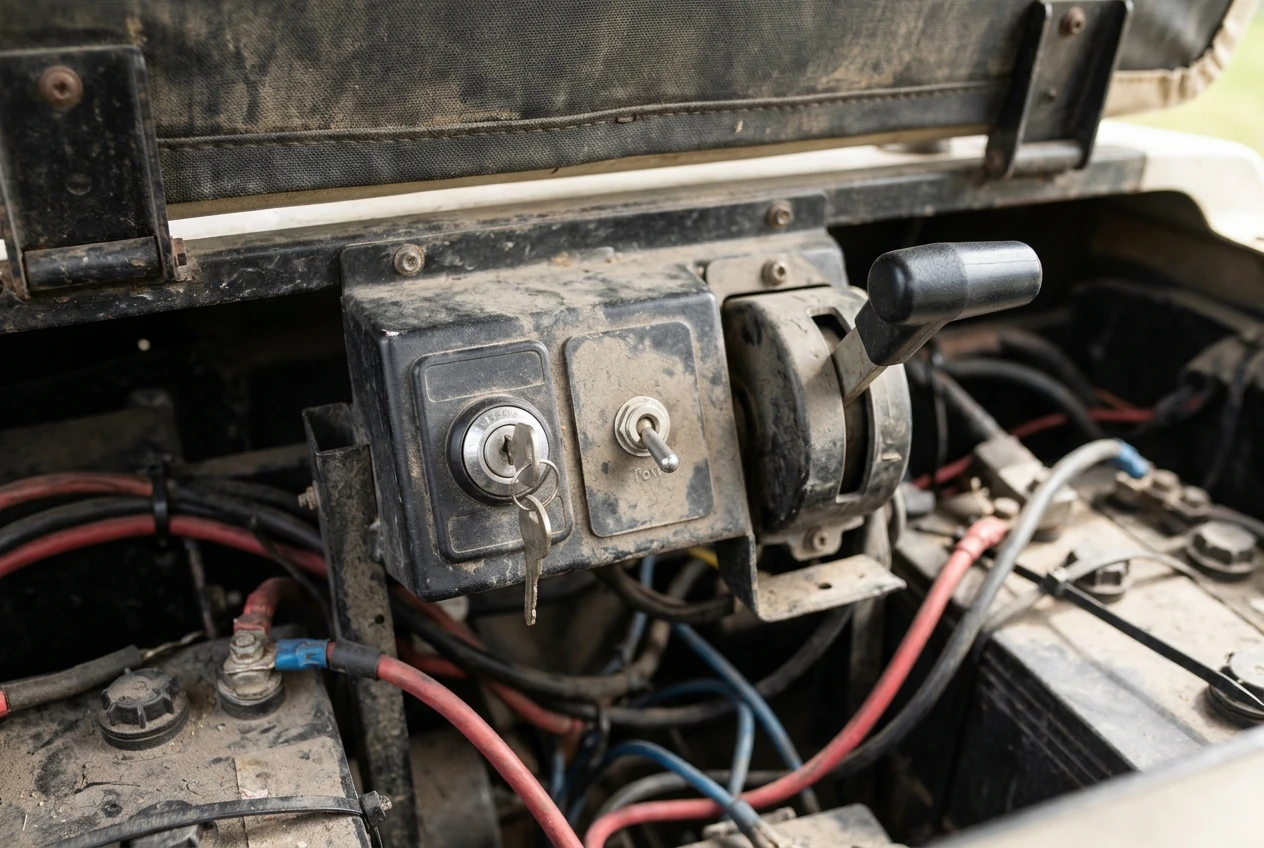
- Key switch. Turn the key fully to the on position and try it again. A worn switch can feel normal and still not make contact, so turn the key back and forth a few times.
- Tow/Run switch. On most electric carts this switch sits under the seat or behind a panel. In Tow, the cart will not drive. It is easy to knock into Tow while cleaning under the seat or servicing the batteries, so set it to Run and try again.
- Forward/reverse selector. Push the lever or switch firmly into forward or reverse. If it is only partway between positions, many carts will not respond at all. Some also have a neutral position that blocks the drive circuit.
- Charger still plugged in. Many electric carts will not move while the charge port is connected. Check that the plug is fully out, the port is clear, and no extension cord is still attached to the cart.
- Brake and seat switches. Some carts only drive when the parking brake is released or when weight is on the seat. If yours has either, release the brake fully and sit down before you try again.
- Fuses and breakers. Some models have an inline fuse or a resettable breaker in the control circuit. Check your owner’s manual for the location and look at it before assuming something bigger has failed.
On a gas cart, add three more: enough fuel in the tank, the key held long enough for the starter to engage, and the selector in neutral if your model requires it for starting.
Read the symptom: silence, a single click, slow crank, or lights on but no movement
What the cart does when you try to start it narrows the list a lot. Pay attention to the exact sound.
- Complete silence. Nothing happens, no click, no hum. This points to no power reaching the control circuit: a switch in the wrong position, a fully drained battery pack, a disconnected or loose main cable, or a blown fuse.
- One click, then nothing. The solenoid is receiving the signal and closing, but power is not reaching the motor or starter. Common causes are weak batteries, a corroded or loose cable, or solenoid contacts that are worn out.
- Rapid clicking. The solenoid closes, drops out, and closes again. This usually means battery voltage is too low to hold the solenoid in, so look at the batteries and the cable connections first.
- Slow, labored crank. Mostly a gas cart symptom. The starting battery is weak, or the terminals are corroded and restricting current.
- Lights on, cart won’t go. Lights and accessories draw very little current compared with the drive motor, so a nearly empty pack can run them and still fail to move the cart. An open interlock (selector, Tow/Run, charger, brake or seat switch), a bad solenoid or a controller fault can cause the same thing.
Keep the symptom in mind as you work through the next sections. It tells you which one to start with.
Electric carts: test the battery pack, then check cables and terminals
A weak battery pack causes more no-starts than any other single part. A multimeter set to DC volts is the only tool you need for the first test.
Start with the whole pack. Touch the meter to the main positive and main negative terminals of the pack and note the reading. A fully charged pack should read slightly above the rated voltage of the pack. Add up the voltages printed on the individual batteries to find the rating. If the reading is far below that, the pack is discharged or failing.
Next, test each battery on its own. In a healthy, fully charged pack, the batteries read close to one another. One battery reading well below the rest is the weak link, and it can drag the whole pack down. If you can have someone press the pedal while you watch the meter, a pack that looks fine at rest but drops sharply under load is worn out.
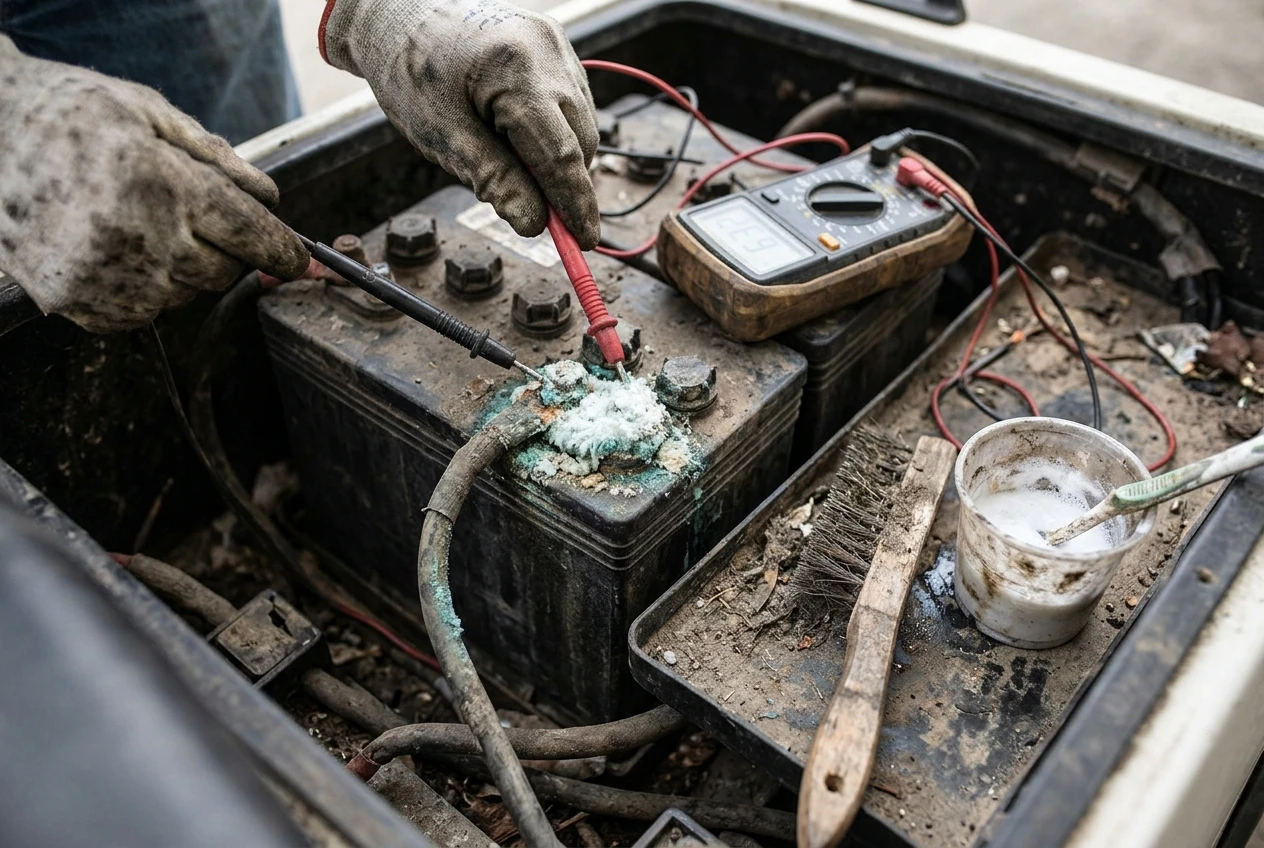
Then look at the cables and terminals:
- White, green or blue crust on a terminal means corrosion. Remove it with a wire brush and a mix of baking soda and water, then rinse and dry.
- Every cable lug should be tight. If you can twist a lug by hand, it is loose enough to cause a no-start.
- Look along each cable for cracked or melted insulation and for strands that have broken near the lug.
- On flooded lead-acid batteries, check the electrolyte level. Top up with distilled water only, and charge the batteries first, since levels rise when charging.
If the pack is simply drained, a full charge may bring the cart back. If it drains again quickly, the batteries have likely reached the end of their life. Lithium packs have a built-in battery management system that can shut the pack off after a deep discharge or a fault, so consult the manual for how to reset or wake yours before condemning it.
Electric carts: solenoid, controller and charger-related causes
If the pack tests good and the cables are clean and tight, the next suspects are the solenoid, the controller and the charger.
Solenoid. The solenoid is an electrically operated switch. A small circuit tells it to close, and it then connects the pack to the motor through two large posts. A single click with a healthy pack often means the coil is working but the contacts inside are burned. With the meter, check for voltage at the small control terminals when you press the pedal. If the coil is getting voltage and clicking, but there is no voltage coming out of the second large post, the contacts are bad and the solenoid needs replacing. Solenoids are a common wear part, and they are usually one of the cheaper repairs.
Controller and pedal switch. If the pack is good and the solenoid never clicks even though the interlocks are all set correctly, the problem may be the pedal switch, wiring in the control circuit, or the controller itself. Some carts show a flashing light or a fault code that tells you what the controller has detected, so check your manual for how to read it. Controllers are expensive, so confirm everything before them first.
Charger-related causes. A cart that went dead may never have charged properly. Check that the outlet works, that any extension cord is intact, and that the charger’s indicator lights come on when it is connected. Many chargers need to detect a minimum voltage from the pack before they begin charging, so a deeply drained pack can sit on a charger without any charge going in. If the charger shows a fault or never starts, the charger may be the failed part rather than the batteries.
Gas carts: fuel, spark and the starter/generator
A gas engine needs fuel, spark and air, and a starter that turns it over. Sort out which one is missing.
Fuel. Check the tank first. A cart that has sat for weeks or months, such as one parked since summer, may have stale fuel that has gummed up the carburetor or fuel line. Check the fuel filter and the fuel line for clogs or cracks. If the engine cranks normally but will not fire, fuel or spark is the usual cause.
Air. A badly clogged air filter can stop an engine from starting. Look at yours and replace it if it is dirty.
Spark. Remove the spark plug and look at it. A wet, black or worn plug should be replaced. To check for spark, use an inline spark tester, connect it to the plug wire, and crank the engine while watching for a spark. Keep the tester away from fuel and open fuel vapor while you do this. If there is no spark, the cause could be the plug, the plug wire, or an ignition component, and the fault is worth a technician’s time.
Starter/generator. Many gas carts use a single unit as both starter and generator. If you hear a click but the engine does not turn, check the 12-volt starting battery, the cables and the solenoid before suspecting the starter. A slow crank usually means a weak battery or corroded terminals. If the battery, cables and solenoid all test good and the engine still will not turn, the starter/generator is the likely cause.
Some models also have an oil-level or safety switch that prevents starting, so check your manual if everything else looks fine.
When a recent accessory is the real culprit: lights, speakers and lift kits
If the cart ran fine until you or an installer added something, start there. Poorly wired accessories are a common cause of a cart that won’t start, and they are easy to miss because the cart worked right up to the day the add-on went in.
LED light kits. Light kits that are wired straight to one battery in a 36-volt or 48-volt pack drain that battery faster than the others, which leaves the pack unbalanced and can cause a no-start. Lights wired without a fuse can also short out. Many electric carts need a voltage reducer so the accessories run from the full pack and not from a single battery. Our guide on whether LED light kits drain golf cart batteries faster explains how the drain happens.
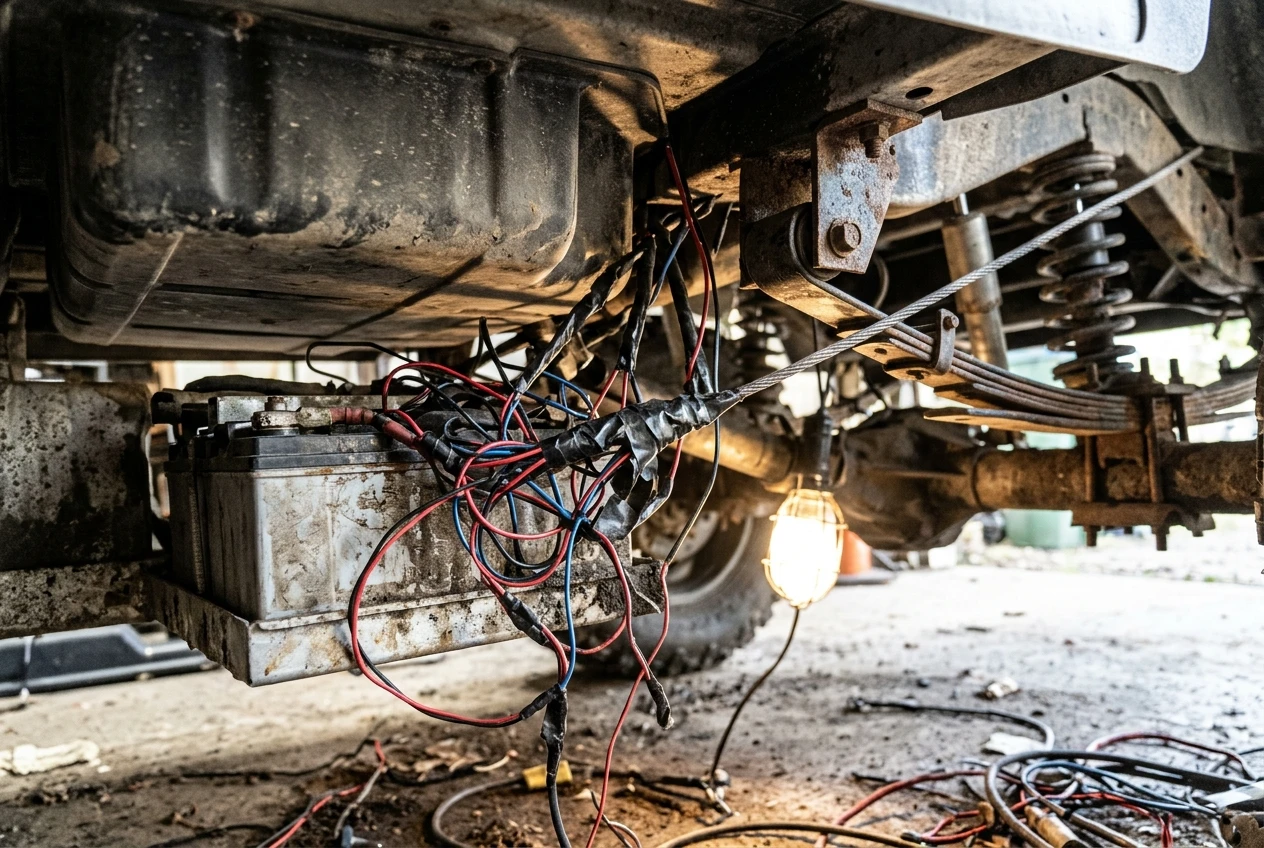
Speakers and amplifiers. A sound system wired to a circuit that stays live with the key off will run the battery down while the cart is parked. A poor ground connection can also cause odd electrical faults. Use a fuse on the power wire and ground the system to a clean metal point on the frame.
Lift kits. A lift changes the geometry of the cart, and wires and cables that were routed for the stock ride height can end up stretched, pinched or pulled loose. Check the main cables, the motor wiring and any connectors near the axles or suspension. If you installed the kit yourself, the steps in our guide on how to install a golf cart lift kit cover routing and re-checking connections afterward.
The fastest test is to disconnect the accessory at its power connection and try starting the cart. If the cart starts, the accessory’s wiring is the problem. Reconnect it one piece at a time to find which one, and check the fuse, the ground and the power source.
Safety rules before you touch anything under the seat
A golf cart battery pack can deliver enough current to burn skin and weld a dropped wrench to a terminal. Take these precautions each time.
- Turn the key off, set the cart to Tow, and remove rings, watches and necklaces.
- Disconnect the main negative cable first when you need to work on the electrical system, and reconnect it last.
- Use insulated tools and keep metal objects away from the battery terminals.
- Wear safety glasses and gloves. Lead-acid batteries contain acid and release hydrogen gas while charging, so work in a ventilated space with no sparks or open flames nearby.
- Chock the wheels. If you need to lift the cart, support it on jack stands and never rely on a jack alone.
- On a gas cart, let the engine cool, work outdoors or in a ventilated area, and keep fuel and spark away from each other.
When to stop and call a professional
Stop and call a technician if you have confirmed that the pack, cables, solenoid and interlocks are all good and the cart still will not run, since the likely remaining causes are the controller or the motor. The same applies to a lithium pack that will not wake after you have followed the manual, any burning smell, melted insulation or cables, and a fuse that blows again right after you replace it. On gas carts, a fuel leak, no spark after replacing the plug, or an engine that cranks but never fires despite fresh fuel are all worth a professional’s time.
Tell the shop what you have already checked and what the cart did when you tried to start it, such as a single click or silence. That saves diagnostic time.
Once the cart is running again, the Golf Cart Maintenance Checklist covers the routine checks that help prevent repeat no-starts. If your testing showed that the battery pack is worn out, the guide on choosing the right battery upgrade will help you pick a replacement.