A stock golf cart is built for flat fairways and paths at low speed, with a light load of two people and a couple of bags. Its suspension is simple and inexpensive, and it is tuned for that job. Owners start looking at golf cart suspension upgrades when the cart does something else: it goes down gravel roads or across a neighborhood, it carries four adults, it has bigger tires, or it has been lifted. This guide ranks the upgrades by the problem they fix, so you can pick the part that matches how you drive.
Why a stock golf cart suspension rides so rough
Most stock carts have very little suspension travel, which is how far the wheel can move up and down before the springs and stops run out. Leaf springs, or in some designs simple coil and shock arrangements, are sized to carry weight without costing much to build. Tires also matter. Narrow, hard, high-pressure tires add to the harshness, because the tire is part of the suspension too.
Age is the other cause. Rubber bushings crack, shocks leak or lose their damping, and leaf springs flatten with years of use. A cart that rode acceptably when new can feel noticeably worse with worn parts, and in that case replacing worn parts with equivalents may help more than buying an upgrade.
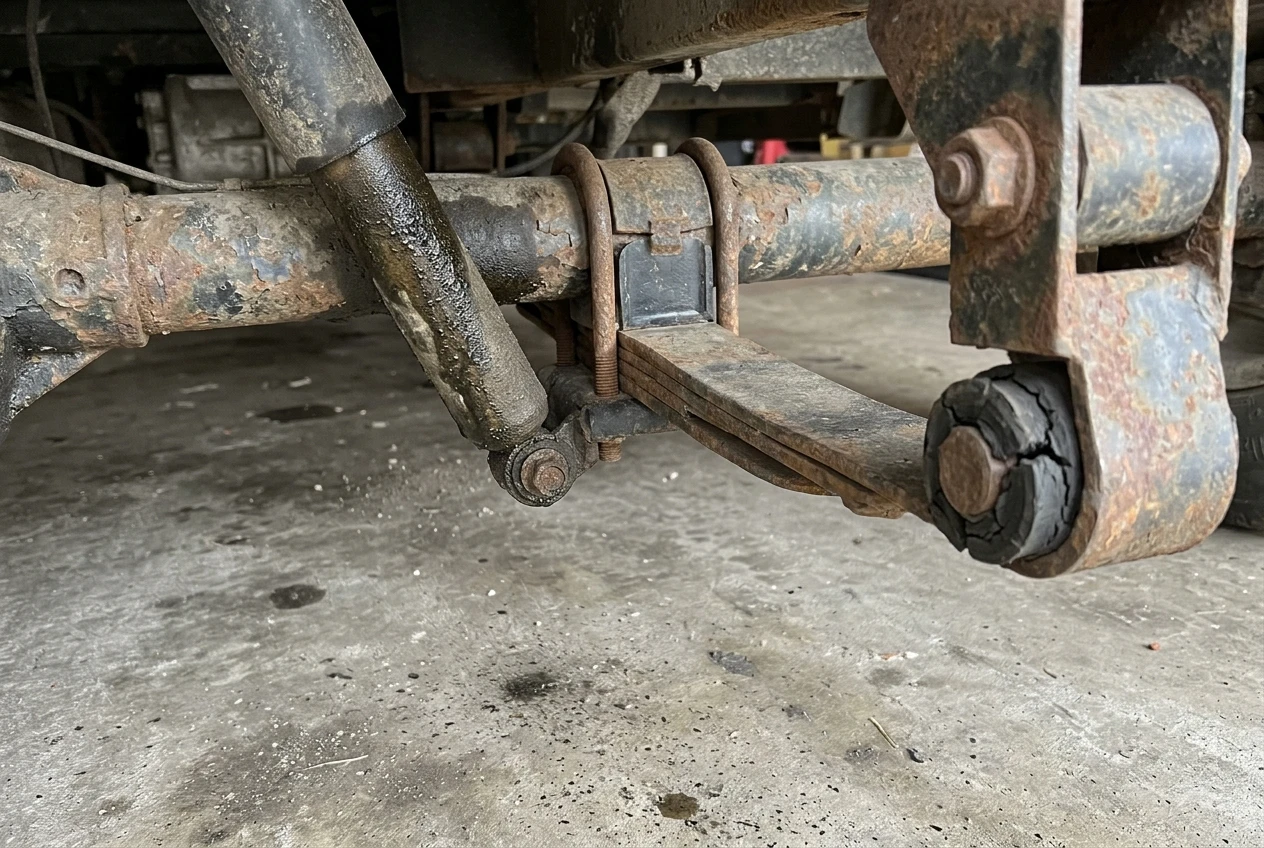
Wear can produce the same symptoms as a design limit, so identify which one you have before you spend anything. A leaking shock or a cracked bushing is a repair. A cart that is fine empty but bottoms out with four passengers needs a different part.
Match the symptom to the upgrade: bumps, body roll, bottoming out, sagging
Each common complaint points to a different part. Here is the usual mapping:
- Harsh bumps and a jittery ride: Replace worn shocks with better-damped ones, and check tire pressure. Shocks control how fast the spring compresses and rebounds, so they have the most effect on small, repeated impacts.
- Body roll in turns, leaning, or a floaty feel: Look at stiffer springs, a sway bar if one is made for your cart, and the condition of the bushings. Tall lifts and lifted-cart tires make roll worse, so this symptom often appears after a modification.
- Bottoming out, meaning a hard thump when the axle hits the stops: This is a load and travel problem. Heavier-rate springs, or extra-leaf and heavy-duty leaf springs, hold the cart higher under weight. Shocks alone will not fix it.
- Sagging, with the rear sitting lower than the front or one side lower than the other: The springs have lost their shape or are too weak for the load. Replacement springs, leaf spring upgrades or a heavier spring pack restore height.
Pick the symptom that bothers you most and start there. If two apply, the next section explains which to do first.
Shocks versus springs: which one to change first
Springs hold the weight of the cart and its passengers. Shocks control how quickly that spring moves. A new shock on a flattened spring will still sit too low, and a heavy spring with a worn shock will bounce.
A practical order:
- Check ride height first. If the cart sits level and at its normal height, the springs are probably fine. Start with shocks.
- If the cart sags or bottoms out, springs come first. Fitting new shocks to a cart that is sitting on its stops gives you almost no benefit.
- If the ride is only harsh over small bumps, change the shocks. This is usually the cheaper and easier job, and it is the most common upgrade for comfort.
Shocks are matched to the cart’s weight and travel. A shock that is too stiff for a light cart rides harshly. One that is too soft for a loaded cart lets the body wallow. Buy shocks made for your cart’s model and your intended load, and ask the seller about the extended and compressed length if you have a lifted cart.
Leaf spring and heavy-duty options for loaded or lifted carts
If you carry passengers on the rear seat, a utility bed, or a cooler and gear, the rear springs carry most of the extra weight. Heavy-duty leaf springs, with more leaves or a higher rate, are the standard answer. They raise the weight needed to compress the spring, so the cart stays higher and level under load.
The tradeoff is ride quality when empty. A stiffer spring pack gives a firmer ride with only the driver aboard, because it was chosen for a heavier load. Pick the spring rate for the load you carry most often, not the heaviest load you could imagine.
Some points to check:
- Whether the springs are made for your cart’s make, model and year. Leaf spring dimensions and mounting points vary between manufacturers.
- Whether you need both sides replaced. Replacing one spring and leaving an old one on the other side usually produces a lean.
- Whether the shocks you already have still suit the new spring rate. A much stiffer spring pack may need shocks with more damping to match.
Lifted carts may need heavier springs too, because lift kits often raise the body without changing how much the springs carry. This is covered in the lift section below.
Why suspension changes stability, steering and braking, not just comfort
Comfort gets the attention, but the suspension also keeps the tires on the ground. A tire that is bouncing or unloaded grips less. That affects three things.
Stability on slopes. A cart with soft or worn springs leans more in a sidehill turn, and a higher body or a lifted frame raises the center of gravity, which makes tipping more likely. Stiffer springs and good shocks limit lean. They do not remove the risk, and a lifted cart with large tires still needs slower, gentler turns on slopes.
Steering. If the front suspension is worn or loose, the cart can wander, and the steering may feel vague. Worn bushings and tired shocks reduce how precisely the front wheels follow your input.
Braking over rough ground. Braking shifts weight forward. A cart with worn rear shocks or a soft front end can pitch or bounce while stopping, and a wheel that bounces off the ground has no braking force at that moment. Good damping keeps the tires in contact over bumps, which helps the brakes work. Check the brakes themselves at the same time, because a smoother ride does not make worn brake shoes safe.
Treat a suspension upgrade as a safety change as well as a comfort one. If you notice leaning, wandering or bouncing under braking, address it before adding speed, passengers or accessories.
Suspension after a lift kit: what to check so the ride doesn’t get worse
A lift kit changes geometry. The cart sits higher, the wheels may sit at different angles, and the shocks work through a different range. Done poorly, a lift makes the ride harsher, increases lean and can wear parts faster.
After a lift, check:
- Shock length and travel. Shocks that are too short can limit travel or hang the axle. Shocks that are too long may bottom out inside their own range.
- Spring rate. The kit may leave the original springs in place. If you now carry bigger tires or more weight, heavier springs may be needed.
- Alignment and steering. A change in height can alter toe and camber, which affects tire wear and steering feel. Have the alignment checked.
- Braking and drivetrain angles. A higher cart changes weight transfer under braking, and bigger tires change the effective gearing and stopping distance.
The install itself is a separate subject, and the steps are in our lift kit guide, linked at the end of this article. Here the point is that a lift and a suspension upgrade are best chosen together, so the shocks and springs match the new height and the new tires.
What to measure and check before you order parts
Ordering the wrong part is the most common and most avoidable expense. Before you buy, gather this information:
- Make, model and year of the cart, plus whether it is gas or electric. Weight and mounting points differ.
- Ride height. Measure from the ground to a fixed point on the frame at each corner, with the cart on level ground and empty. Write the numbers down. A difference from side to side shows a weak spring.
- Shock details. Note the part number if it is printed on the shock, the mounting style (eye, stem or bar), and the length extended and compressed.
- Typical load. Estimate how many people and how much gear you carry most often.
- Tire size and pressure. Tires affect ride and may be the cheapest improvement.
- Condition of the surrounding parts. Look at bushings, mounting bolts and the frame near the mounts for cracks or play.
Take photos of what you have. If a seller asks which version you own, a photo of the existing shock or spring answers the question and prevents a return.
Fitting it yourself or paying a shop: where the line sits
Shock replacement is within reach of most owners with basic hand tools, a jack and jack stands. The cart must be supported on stands, never only on a jack, and you should disconnect the main battery negative on an electric cart or otherwise prevent it from moving or starting before you work under it.
Spring and leaf spring replacement is a bigger job. Parts are heavy, hardware can be seized or corroded, and the axle needs to be supported safely while the spring is released. Many owners do this at home with the right equipment and patience, and a shop is the better choice if you lack stands, a good place to work, or the time.
Pay for a shop when:
- Steering parts, the front axle or the brakes are involved.
- Bolts are seized or the frame mount is damaged.
- The cart pulls to one side or the alignment needs adjusting after the work.
- You are unsure that the finished cart is safe to drive.
A bolt-on part you can install correctly saves money. A part you install incorrectly can cost more than the shop would have.
Keeping the new setup working: inspection and maintenance habits
New suspension parts last longer with regular checks. After installation, retighten the mounting hardware after the first few rides, because new bushings and fasteners settle. After that, look over the suspension at regular intervals, and again after heavy use or rough terrain.
Check for:
- Oil leaking from a shock body or a shock that has lost its resistance.
- Cracked, split or flattened bushings.
- Loose, bent or corroded bolts and mounts.
- Cracks or rust on leaf springs, and uneven ride height from side to side.
- Uneven tire wear, which points to an alignment or suspension problem.
Include these checks in your general routine, such as the one in our golf cart maintenance checklist. Tire pressure belongs on that list too, since it changes the ride more than most owners expect.
Browse the suspension upgrades in our shop, or start with the lift kit install guide if you’re raising your cart as well.