The Complete 2026 Guide to Golf Cart Batteries: Types, Maintenance, Lifespan & Best Choices
Whether you use your golf cart for neighborhood cruising, course play, or commercial fleet operations, your battery pack is the heart of your cart’s performance. A strong battery delivers longer range, faster charging, and reliable power. A weak battery causes slow acceleration, short runtime, and expensive replacements. This guide explains everything you need to know about golf cart batteries—types, maintenance, charging, lifespan, and how to choose the right setup for your cart.
For more golf cart tips, visit our Golf Cart Maintenance Hub.
Get Your Battery Here
Types of Golf Cart Batteries
Golf cart batteries come in several chemistries, each with different performance, maintenance needs, and lifespan. The most common types are Flooded Lead‑Acid (FLA), AGM, and Lithium‑ion.
Flooded Lead‑Acid (FLA)
- Lowest upfront cost
- Requires regular watering and cleaning
- Can leak or spill if not maintained
- Best for budget‑focused owners
AGM (Absorbed Glass Mat)
- Maintenance‑free and sealed
- Resistant to vibration
- Longer lifespan than FLA
- Ideal for carts used frequently or on rough terrain
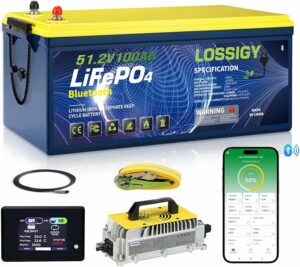
Lithium‑Ion (LiFePO₄)
- 5,000+ charge cycles (20× more than lead‑acid)
- Lightweight—improves range and speed
- No watering or corrosion issues
- Fast charging and long lifespan
- Best overall performance for 2026
Golf Cart Battery Voltage Options
Golf cart batteries come in 6V, 8V, and 12V units, configured to create 36V or 48V systems.
- 36V systems: Good for flat terrain and casual driving
- 48V systems: More torque, better hill climbing, longer range
Always match your battery voltage to your cart’s motor and controller.
How to Choose the Best Golf Cart Battery
Choosing the right battery depends on how you use your cart. Here are the key factors:
- Voltage: 48V for maximum performance
- Amp‑hours (Ah): Higher Ah = longer range
- Chemistry: Lithium for longevity, AGM for maintenance‑free, FLA for budget
- BMS (Battery Management System): Required for lithium
- Charger compatibility: Must match voltage and chemistry
For a deeper dive, see our Best Golf Cart Batteries Guide.
Golf Cart Battery Maintenance Tips
Proper maintenance extends battery life and prevents breakdowns. Here are the essential steps:
Lead‑Acid Battery Maintenance
- Check water levels weekly
- Use distilled water only
- Clean terminals to prevent corrosion
- Inspect cables for wear
- Charge after every use
Lithium Battery Maintenance
- No watering required
- Store between 50–80% charge during off‑season
- Keep batteries in a cool, dry environment
- Use only lithium‑compatible chargers
For full maintenance instructions, visit our Battery Care Guide.
Charging Golf Cart Batteries Correctly
Charging habits directly affect battery lifespan.
- Charge after every ride
- Do not let batteries sit discharged
- Use smart chargers for lithium
- For 36V and 48V carts, follow manufacturer charging times
Signs Your Golf Cart Battery Needs Replacement
- Cart slows down on hills
- Reduced range
- Longer charging times
- Visible corrosion or swelling
- Battery pack older than 4–6 years (lead‑acid)
Mixing old and new batteries is never recommended.
Lithium vs Lead‑Acid: Which Is Best?
Industry data shows a clear shift toward lithium batteries for golf carts.
| Feature | Lithium | Lead‑Acid |
|---|---|---|
| Lifespan | 5–8 years | 1–2 years |
| Maintenance | Zero | High |
| Weight | Light | Heavy |
| Charging | Fast | Slow |
| Total Cost | Lower long‑term | Higher long‑term |
For most owners, lithium is the best long‑term investment.
External Resources
Conclusion
Choosing the right golf cart battery—and maintaining it properly—ensures your cart runs longer, faster, and more reliably. Whether you prefer the affordability of lead‑acid or the performance of lithium, understanding your battery system is the key to maximizing lifespan and avoiding costly breakdowns.
For more expert guides, visit Bissell’s Golf Carts.